What exactly is tree cabling and bracing?
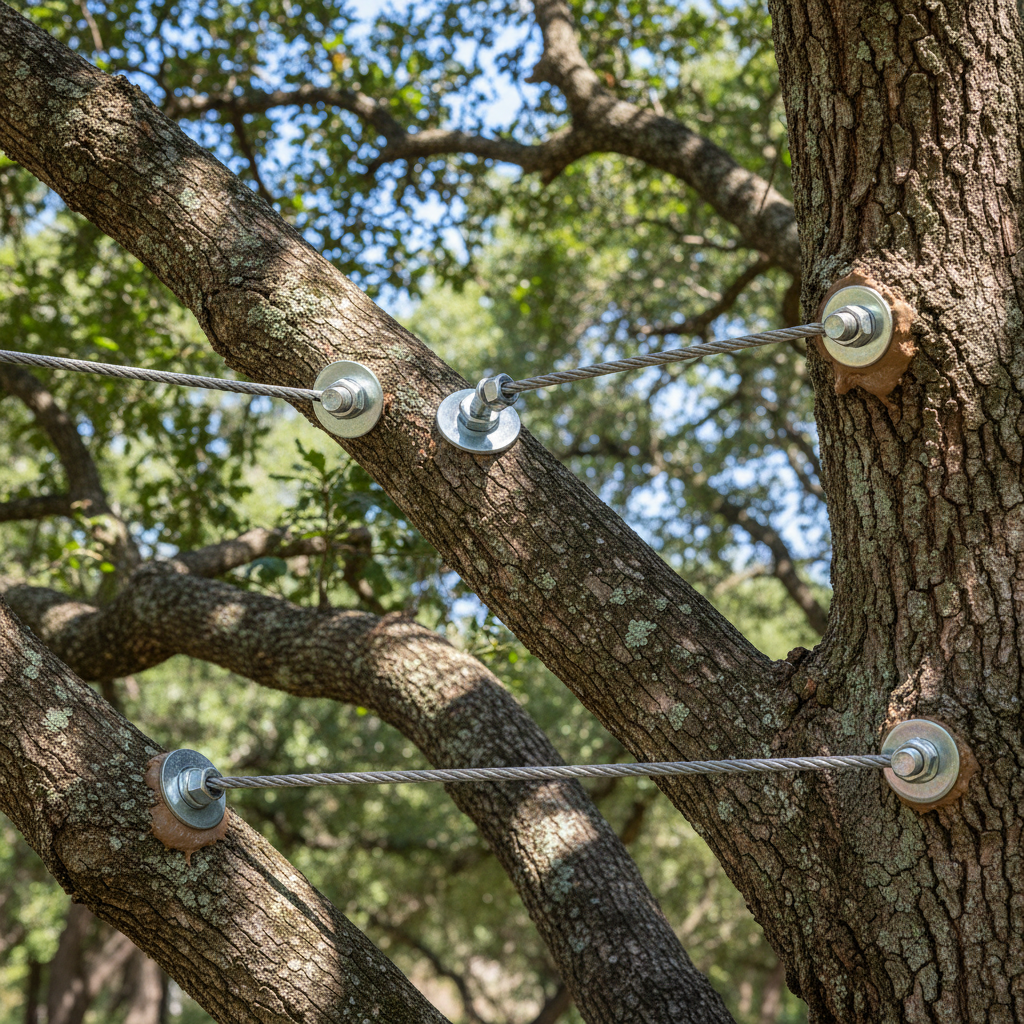
Alright, let's get right to it. Tree cabling and bracing is essentially like giving your tree a support system. We're talking about using steel cables and sometimes rigid rods to help stabilize weak branches, multi-stemmed trees, or limbs that have splits or cracks. The cables are installed high up in the canopy, usually connecting two or more limbs, providing dynamic support. They let the tree sway a bit, which is natural, but stop it from tearing apart. Bracing, on the other hand, uses steel rods drilled through limbs or trunks, offering more rigid support, often used for splits that are already there. It's all about reducing the risk of failure and keeping your tree standing strong, especially when those La Grange thunderstorms roll through with their high winds.
When should I consider cabling or bracing for my trees?
You should start thinking about it if you notice a few things. Maybe you've got a tree with two main trunks that are growing too close together, forming a 'V' shape. That's a classic weak point. Or perhaps a large limb has a crack near where it attaches to the main trunk. Sometimes, it's just a very heavy, horizontal limb that looks like it's struggling under its own weight. We also see it a lot with older, mature trees that have some structural issues but are otherwise healthy and valuable to the property. The goal isn't to save every tree, but to save the ones that are worth saving and pose a risk if they fail. If you're unsure, it's always best to have a pro come out and take a look. Don't wait until a limb comes crashing down.
Is cabling and bracing a permanent solution?
That's a good question, and the short answer is: it's a long-term solution, but not necessarily 'forever.' The hardware itself – the cables and rods – are designed to last for many years, often decades. However, trees are living things; they grow, they change, and their needs evolve. The cables might need adjustment as the tree expands around them, or new weak points could develop over time. Think of it like getting braces for your teeth – they do their job, but you still need to maintain them and check in with the dentist. I usually recommend having your cabled or braced trees inspected every few years, especially after a big storm. It's part of responsible tree care, not a one-and-done deal.
Will cabling or bracing hurt my tree?
When done correctly by experienced professionals, no, it won't hurt your tree. In fact, it's designed to prevent harm. We use specialized hardware that minimizes damage to the tree. The cables are installed with 'thimbles' and 'dead-end grips' that allow for movement without girdling the branch, and the attachment points are designed to let the tree grow around them without being choked. Bracing rods are typically stainless steel and are installed in a way that allows the tree to compartmentalize the wound. The key here is 'done correctly.' A poorly installed system can definitely cause problems, so make sure you're hiring someone who knows what they're doing. Mighty Tree always follows industry best practices to ensure the health of your trees.
Can I cable or brace my tree myself?
Look, I appreciate a good DIY spirit, but this isn't a project for the average homeowner. This isn't hanging a picture frame. We're talking about working at heights, often with heavy equipment, and dealing with significant forces. Improper installation can do more harm than good, leading to girdling, branch failure, or even personal injury. You need specialized tools, specific knowledge of tree biomechanics, and a good understanding of how different tree species react to these systems. Plus, there's the safety aspect – climbing trees and handling heavy cables at 30, 40, or 50 feet up is dangerous work. It's always best to call in a certified arborist for this kind of job. You wouldn't try to re-wire your whole house yourself, would you? Same principle here.
What's the difference between dynamic and rigid cabling?
This is where things get a bit technical, but it's important. Dynamic cabling uses materials like high-strength synthetic rope that allows for more flexibility and movement. It's often preferred for younger trees or situations where you want the tree to continue building reaction wood and strengthen itself naturally, while still having that safety net. It's like a really strong bungee cord. Rigid cabling, which is what most folks think of, uses steel cables. These provide a much firmer, less yielding support. We typically use rigid systems for mature trees with significant structural defects, where minimizing movement is key to preventing failure. Each has its place, and the choice depends on the tree's specific condition, species, and the level of support it needs. Sometimes, we even combine them. It's all about tailoring the solution to your tree's unique situation.
Does cabling and bracing mean I don't need to prune my tree?
Absolutely not. Cabling and bracing are structural support systems; they're not a substitute for proper pruning. In fact, they often go hand-in-hand. When we install a cabling system, we almost always do some structural pruning at the same time. This helps reduce the weight on the supported limbs, improves the tree's overall balance, and removes any dead or crossing branches that could cause problems down the line. Think of it this way: the cables are like a seatbelt, but pruning is like keeping your car's engine tuned up. Both are essential for the tree's long-term health and safety. Regular maintenance, including pruning, is still crucial for any tree, cabled or not.