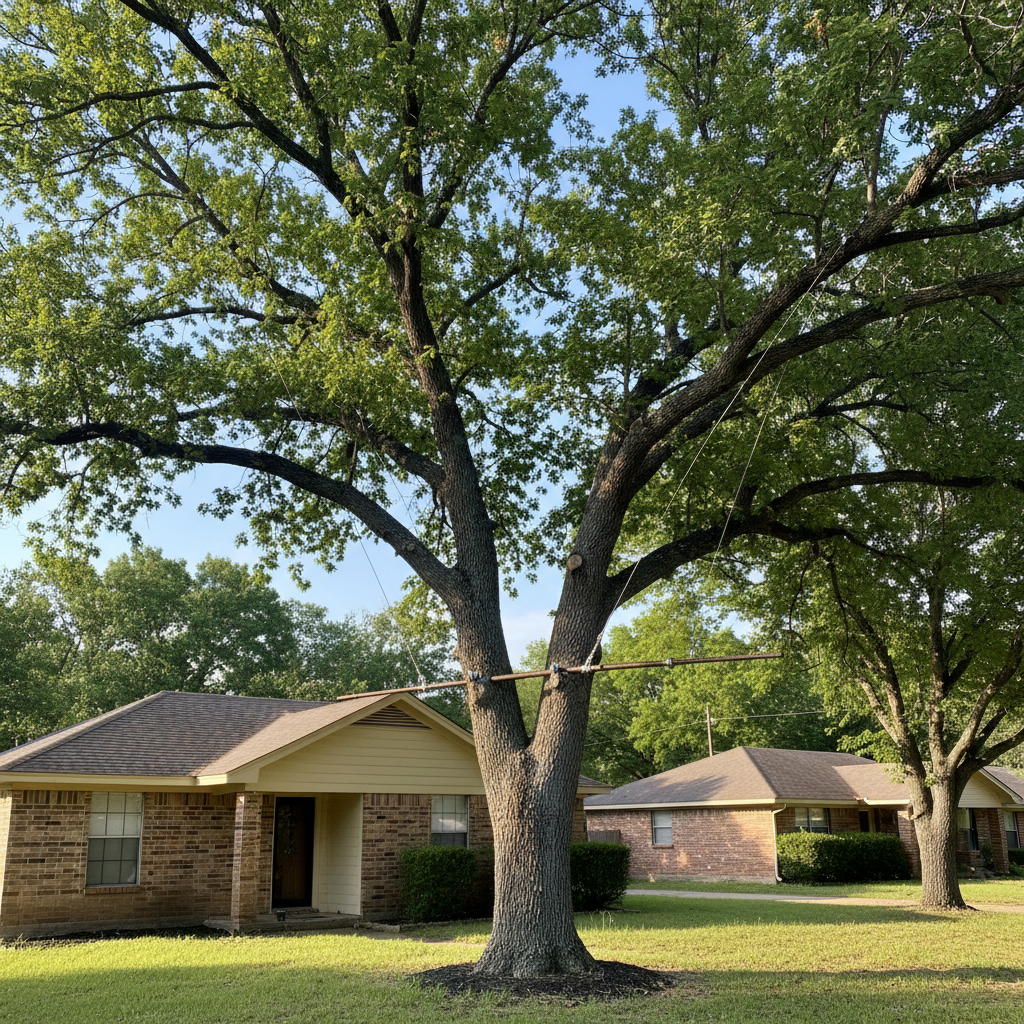
Got a tree on your property that's looking a little rough? Maybe it's got a split trunk, a heavy limb that's about to tear off, or it's just leaning a bit too much for comfort. You might be thinking about cabling or bracing it to save it. That's a smart move, but naturally, you're wondering what it's going to cost. I get that question all the time here in La Grange.
Look, I'm not going to tell you "it depends" and leave it at that. I'm going to give you some real numbers based on what I see in our area. But first, you need to understand what goes into the price.
What Affects the Cost of Cabling and Bracing?
A few big things drive the cost up or down. It's not just a one-size-fits-all kind of job.
- Tree Size and Type: A small ornamental tree is way different from a massive live oak that's been standing for a hundred years. Taller, wider trees mean more equipment, more time, and often more specialized techniques. The wood density also plays a role; softer woods are sometimes easier to work with than dense hardwoods.
- Number of Cables/Braces Needed: Some trees just need one cable to support a weak crotch. Others might need a whole system of multiple cables and perhaps even a brace rod or two. More hardware means more material cost and more labor.
- Accessibility: Can we easily get our equipment to the tree? If it's in a wide-open yard, that's simple. If it's tucked between your house, a fence, and your neighbor's prized rose bushes, it's going to take more careful maneuvering and potentially more time, which adds to the cost. Trees near power lines also require extra safety precautions and sometimes coordination with the utility company, which can add complexity.
- Tree Condition: Is the tree just a little weak, or is it severely compromised with significant decay or a massive split? The worse the condition, the more intricate and time-consuming the work becomes. Sometimes, a tree is too far gone, and removal is the only safe option, but we always try to save it if we can.
- Type of System: There are different kinds of cabling and bracing. Standard dynamic cabling uses flexible ropes, while static cabling uses steel cables. Bracing involves steel rods drilled through limbs or trunks. Dynamic systems are generally a bit more expensive upfront due to the material cost, but they allow for natural tree movement, which can be better for the tree long-term.
Typical Cost Ranges in La Grange, TX
Alright, let's get to the numbers. Remember, these are averages, and your specific situation might be a little different. But this should give you a good ballpark.
- Single Cable Installation (Small to Medium Tree): For a relatively straightforward job on a tree, say, under 30 feet tall, you're usually looking at $350 to $600. This includes one cable and all the necessary hardware.
- Multiple Cables or Bracing (Medium to Large Tree): If your tree is bigger, say 30-60 feet, or needs a couple of cables, or maybe a brace rod, the price range typically falls between $600 and $1,200. This is common for those larger pecan trees or older oaks we see around town, especially if they're in a bit of a tight spot.
- Complex Systems (Large, Challenging Trees): For very large trees (over 60 feet), or those requiring multiple cables, bracing, and perhaps some light pruning to relieve weight, you could be looking at $1,200 to $2,500+. These are the jobs that might require a bucket truck or extensive climbing, and a lot of planning.
These prices generally include the labor, the materials (cables, thimbles, eye bolts, brace rods, etc.), and the cleanup of any minor debris generated during the installation. They don't typically include major pruning or tree removal, which would be quoted separately.
What Should a Good Quote Include?
When you get a quote from me or any other reputable arborist, it should be clear and detailed. Here's what you want to see:
- Specifics of the Work: Exactly how many cables or rods, where they'll be placed, and what type of system will be used.
- Materials: A breakdown of the hardware.
- Total Cost: A clear, all-inclusive price.
- Timeline: An estimated start and completion date.
- Insurance and Licensing: Confirmation that the company is insured and licensed. You don't want someone working on your property without that.
- Warranty (if applicable): Some companies might offer a limited warranty on their work.
How to Avoid Overpaying
Nobody wants to get ripped off, especially when you're trying to do the right thing for your trees. Here's my advice:
- Get Multiple Bids: Always get at least two, preferably three, quotes from different certified arborists. This helps you compare prices and understand the scope of work. Just make sure you're comparing apples to apples – ensure each quote is for the same type of work and materials.
- Ask for Certification: Make sure the arborist is ISA Certified. That means they've got the training and knowledge to do the job right and safely.
- Check References and Reviews: See what other folks in La Grange are saying about them. A good reputation means a lot in a small community like ours.
- Don't Go for the Cheapest Bid Automatically: The lowest price isn't always the best deal. Sometimes, a super low bid means they're cutting corners on safety, materials, or insurance. You don't want that.
- Understand the 'Why': Ask the arborist to explain why they're recommending a particular solution. A good arborist will educate you, not just tell you what to do.
Cabling and bracing can really extend the life of a valuable tree, preventing a hazardous situation and saving you the cost of removal down the line. If you've got a tree that needs a little help, give Mighty Tree a call. We'll come out, take a look, and give you an honest assessment and a clear quote.