You've got trees on your property, and you want to keep 'em healthy. That's smart. A healthy tree adds value, provides shade, and just makes your place look better. But sometimes, especially with our Texas weather, it's not always clear what your trees need. I get a lot of the same questions from folks around La Grange, so I figured I'd put together some straight answers for you.
How much water do my trees really need, especially in a drought?
This is probably the most common question I hear, and it's a good one, especially with how dry it can get around here. For mature trees, you're generally looking for about an inch of water per week, either from rain or irrigation. But here's the kicker: it's not about frequent, shallow watering. You want to water deeply and less often. Think about it like this: you want the water to soak down into the soil, encouraging those roots to grow deep and strong. If you just sprinkle a little every day, the roots stay near the surface, making the tree more vulnerable when it gets really hot and dry.
During a drought, you need to be even more intentional. Focus on slow, deep watering. A soaker hose or drip irrigation system is your best friend here. Run it for several hours, once or twice a week, around the drip line of the tree – that's the area directly under the outer edge of the branches. Avoid watering right up against the trunk; that can cause rot. Young trees, especially those planted in the last 2-3 years, need more consistent watering, maybe 2-3 times a week, because their root systems aren't established yet. Don't forget to check the soil moisture with a screwdriver or a moisture meter before you water again. If it's still damp a few inches down, hold off.
When is the best time to prune my trees?
Generally, the dormant season – late fall to early spring – is the best time for most heavy pruning. That's when the leaves are off, so you can clearly see the tree's structure, and the tree is less stressed. Plus, there's less chance of disease spreading when the tree isn't actively growing. For flowering trees, you usually want to prune right after they've finished blooming. If you prune them before they flower, you'll cut off all the buds for that year.
Now, there are exceptions. If you've got dead, damaged, or diseased branches, you should remove those as soon as you spot them, no matter the season. Those are hazards and can spread problems to the rest of the tree. Also, if a branch is rubbing against your house or is a safety concern, don't wait. Just make sure you're using clean, sharp tools and making proper cuts to avoid damaging the tree further. Improper pruning can actually do more harm than good, so if you're unsure, it's always best to call in a professional.
My tree looks sick. How can I tell what's wrong with it?
This is tough because a lot of tree problems can look similar. Yellowing leaves, wilting, stunted growth, or spots on the leaves could be a dozen different things: nutrient deficiency, overwatering, underwatering, pests, or disease. The first thing I always tell people is to look for patterns. Is it just one branch, or the whole tree? Is it happening to all your trees, or just one species?
Here are some things to check:
- Leaves: Are they discolored, spotted, chewed, or falling prematurely? Look closely for tiny insects on the undersides.
- Branches/Trunk: Do you see any unusual growths, cankers, cracks, holes, or sawdust? Are there any signs of fungus or mushrooms growing on the bark?
- Soil: Is it too wet, too dry, or compacted? Our clay soils here in La Grange can get really compacted, which chokes out roots.
If you see signs of pests, try to identify them. Are they aphids, borers, scale insects? Each one requires a different approach. If it looks like a disease, sometimes it's fungal, sometimes bacterial. Without knowing exactly what you're dealing with, you could be treating the wrong thing and wasting your time and money. If you're stumped, take some clear photos and give me a call at Mighty Tree. Sometimes a quick look is all it takes to diagnose the issue.
What's the deal with tree fertilization? Do my trees really need it?
Not every tree needs fertilization every year, but many can benefit, especially if they're showing signs of stress, slow growth, or if they're planted in poor soil. Our natural soils around here can sometimes be low in certain nutrients, or the nutrients might be locked up due to pH imbalances.
Think of it like this: a tree in a forest gets a constant supply of nutrients from decomposing leaves and organic matter. A tree in your yard, especially if you're raking up leaves and keeping a tidy lawn, isn't getting that natural replenishment. A soil test is really the best way to figure out exactly what your soil is lacking. You can get a kit from the AgriLife Extension office. It'll tell you what nutrients are low and what the pH is, so you're not just guessing.
If fertilization is needed, slow-release granular fertilizers are often a good choice, applied around the drip line. Deep root fertilization, where we inject liquid nutrients directly into the root zone, is another effective method, especially for established trees. Just be careful not to over-fertilize; too much can burn the roots and do more harm than good.
Should I worry about oak wilt in La Grange?
Absolutely, you should be aware of oak wilt. It's a serious fungal disease that's been a real problem for live oaks and red oaks across Texas, and La Grange is no exception. It can spread quickly and kill a mature oak in a matter of weeks or months. The main ways it spreads are through root grafts between neighboring trees and by sap-feeding beetles carrying spores from infected trees to fresh wounds on healthy oaks.
Here's what you need to know to protect your trees:
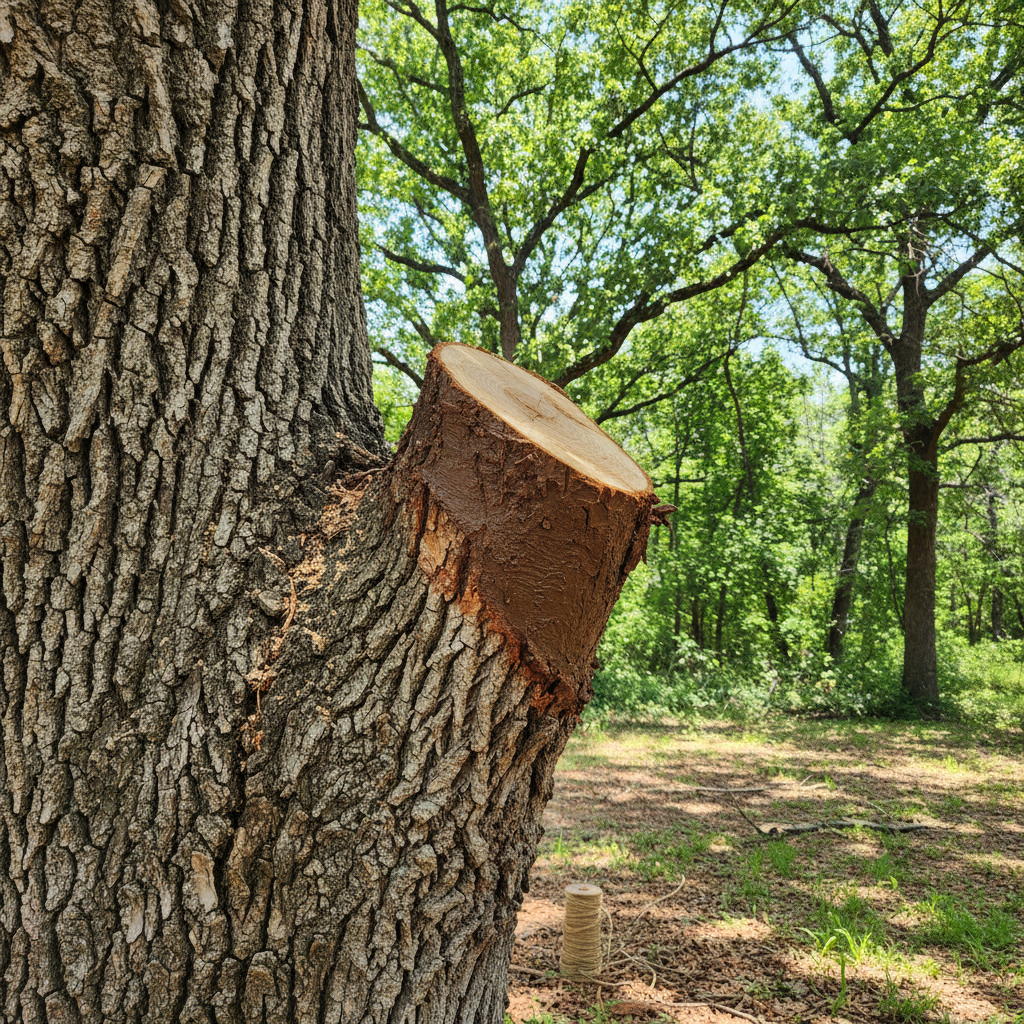
- Avoid pruning oaks from February to June: This is when the beetles are most active and the risk of infection is highest. If you absolutely have to prune during this time, immediately paint the wound with a latex-based wound dressing.
- Sanitize your tools: If you're pruning multiple oak trees, clean your tools with a bleach solution between each tree.
- Recognize the symptoms: For red oaks, leaves rapidly turn brown and fall off. For live oaks, you'll often see browning or yellowing leaves starting at the top of the tree or on individual branches, often with a distinct vein discoloration.
- Remove infected trees quickly: If you suspect oak wilt, get a diagnosis fast. Infected red oaks should be removed immediately. For live oaks, sometimes trenching or fungicide injections can help save nearby healthy trees, but it's a battle.
It's a devastating disease, and prevention is key. If you see anything suspicious, don't hesitate to call a certified arborist who knows about oak wilt.
When do I need to call a professional tree service instead of doing it myself?
Look, I appreciate a good DIY project as much as the next person, but some things are just not worth the risk. Here's when you really need to call in the pros:
- Large tree removal: Taking down a big tree is dangerous. There's a huge risk of injury, property damage, or worse. We have the right equipment, training, and insurance for a reason.
- Pruning large branches: Anything that requires a ladder, a chainsaw, or climbing into the tree is a job for someone with experience and safety gear. You don't want to fall, or have a heavy branch fall on you or your house.
- Trees near power lines: This is a no-brainer. Electricity and trees don't mix, and it's incredibly dangerous. Always call the power company first, then a professional tree service.
- Diagnosing complex problems: If your tree looks sick and you can't figure out why, or if you suspect a serious disease like oak wilt, a certified arborist can provide an accurate diagnosis and treatment plan.
- Storm damage: After a big storm, you might have broken branches hanging precariously. These are often under tension and can be very unpredictable. Leave it to the experts.
Your safety and the health of your trees are important. Sometimes, trying to save a few bucks can end up costing you a lot more in the long run. If you're ever in doubt, just give Mighty Tree a call. We're here to help you make the right decision for your trees and your property.